Car Seat Rules in Singapore: Taxis, Grab, MRT and Buses
Published 19 Sept 2026Updated 19 Sept 2026Little Buddy Team
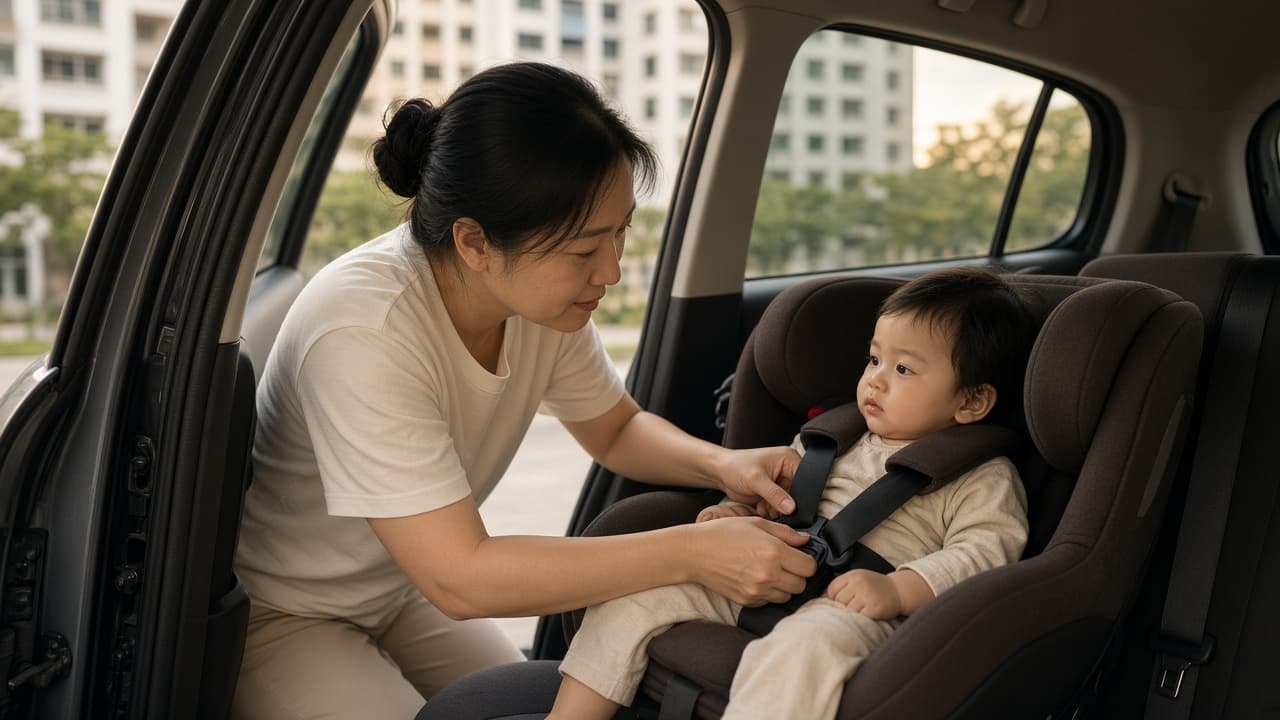
The first taxi ride with a newborn, or the first MRT trip with a stroller, is when parents look up car seat rules Singapore families actually have to follow. Height, not age, decides whether a child needs a restraint in a car. Buses and trains work on a different set of rules: fares, stroller size, and how you board. This guide covers both, because new parents usually need them on the same outing.
This page is general information for Singapore parents, not legal advice. Child-restraint and fare rules change. Confirm the current position on the Singapore Police Force child-restraint standards page, LTA’s family commuting tips, and SimplyGo child concessionary fares before you travel.
The 1.35m car seat rule (not age)
In Singapore, a passenger below 1.35 metres in height must be properly secured in an approved child restraint that fits their height and weight, or in a booster used with a body-restraining (three-point) seat belt. That is the core of the child car seat Singapore law. It applies in a private car and in a private-hire car. It does not turn on the child’s birthday.
Measure rather than guess. Many children reach 1.35m somewhere around eight to ten years old, but a tall seven-year-old may already be over the line, and a shorter ten-year-old may still need a booster seat Singapore parents would keep in the car. Once the child is 1.35m or taller, the adult belt is the legal default — still check that the lap belt sits on the hips, not the stomach, and that the shoulder belt crosses the chest, not the neck.
The driver is responsible for making sure the child is secured. Traffic Police treat a failure as an offence. For light vehicles, the composition fine was raised in April 2019 to S$150, with three demerit points. On conviction the maximum can be higher. Treat those figures as a reason to buckle in correctly, then check the current Traffic Police penalties page if you need the latest schedule.
Which child car seat Singapore parents usually use
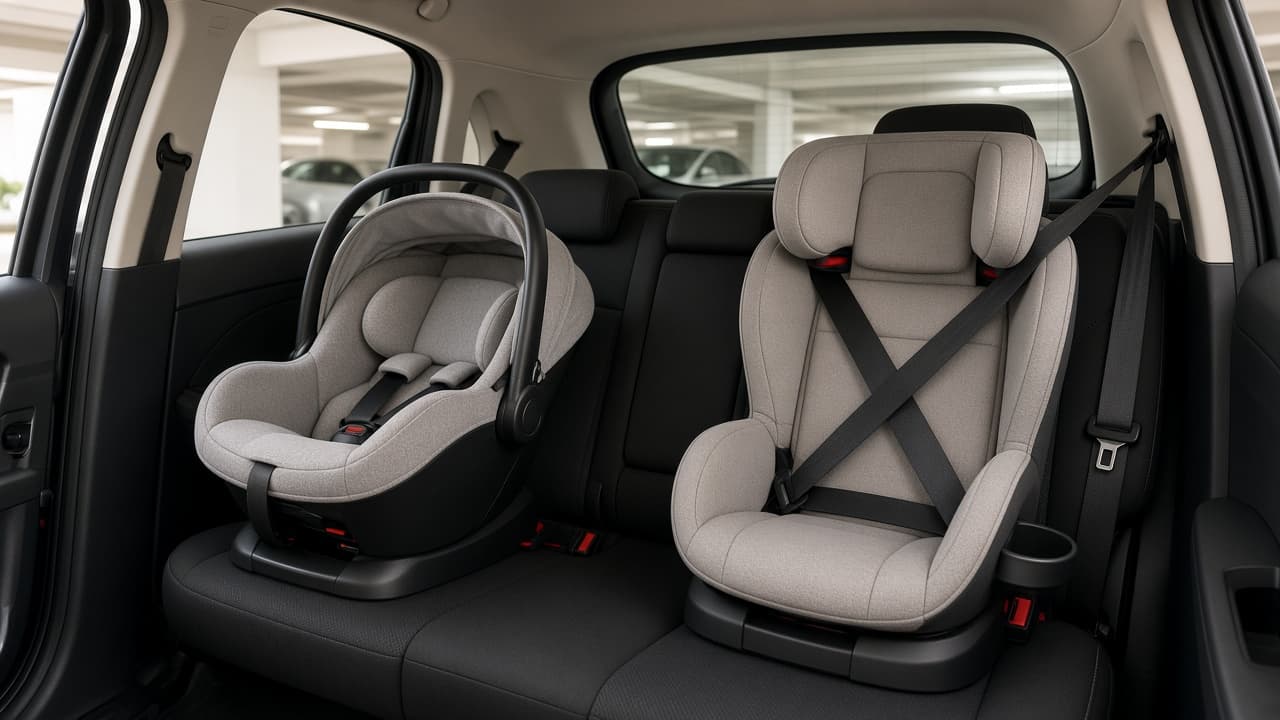
The law asks for a restraint that is appropriate for the child’s height and weight. In practice, that usually means three stages, each until the child outgrows the seat’s own limits:
- A rear-facing infant seat or capsule for newborns and younger babies. Keep rear-facing for as long as the seat allows; it supports the head and neck better in a sudden stop.
- A harnessed forward-facing child car seat once the child has outgrown the rear-facing limits. The five-point harness should sit snug, with the chest clip at armpit level.
- A booster seat Singapore families use when the child has outgrown the harness but is still below 1.35m. The booster lifts the child so the car’s adult belt fits. A high-back booster gives more side support than a cushion; a cushion only works if the child can sit upright for the whole trip and the car has a headrest.
Look for an approval mark on the seat. Traffic Police added the European standard ECE R129 (i-Size) in June 2025. ECE R44 remains an approved standard. Older British and Japanese marks can still be used until 31 December 2030, after which they drop off the approved list. Check the sticker, ask the retailer, or read the manufacturer’s notes rather than assuming a second-hand seat is legal. ISOFIX is a fitting system, not a separate legal requirement; it can make installation more consistent if the car has the anchors.
Taxi child seat vs Grab child seat
This is the question new parents search most, because the two look similar from the kerb and are not the same in law.
Licensed taxis are exempt from the child-restraint rule when the child sits in the rear. That is why a street-hailed Comfort or similar cab will not usually arrive with a seat. The Ministry of Transport has said taxis stay exempt because a street-hail passenger cannot tell the driver in advance that a child seat is needed. You can still bring your own portable restraint, and the child should sit in the back, not the front. Legal exemption is not the same as the safest option.
Private-hire cars — Grab, TADA, and other booked rides — are not exempt. A child below 1.35m must use an approved restraint, just as in your own car. From 1 January 2025, ride-hail platforms must let you indicate that you need a vehicle with a child seat, and must tell you if the matched car cannot provide one so you can cancel and rebook. If you forget to tick the option, the driver may cancel without penalty.
Services such as GrabFamily (age bands with an infant seat or a booster) are one way to book a Grab child seat. Other apps have similar “kids” or “child-friendly” options. Treat them as examples, not an endorsement of any brand. Availability varies by time of day. You can also install your own seat in a private-hire car if the driver agrees and the seat fits correctly. Inspect the buckle and the recline before you pull away; a folded booster in the boot is not the same as a child who is actually strapped in.
Baby on MRT and stroller on bus Singapore
On trains and public buses there is no car seat. The useful questions are whether the child pays, whether an open stroller will fit, and how you move through a station without using the escalator.
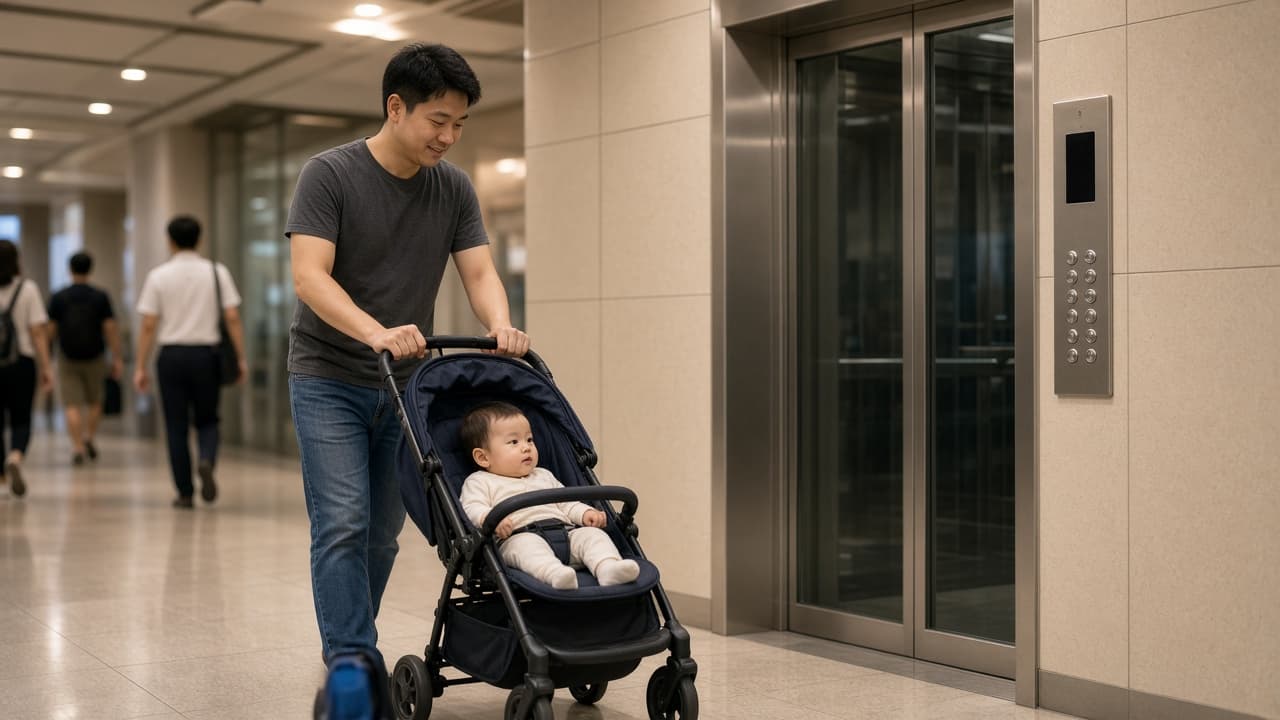
Open strollers are allowed on buses and trains if they are no larger than about 120cm by 70cm. Park in the designated wheelchair or stroller space, put the brakes on, and use the restraint straps if the bus has them. Wheelchair users have priority for that bay; fold the stroller if they need it. On a crowded bus the captain may ask you to fold anyway, so do not load the stroller like a grocery trolley.
- Board a bus at the front where possible. If the stroller will not fit the front door, tell the bus captain and use the rear door.
- On the MRT, always take the lift. Every station has at least one barrier-free route. A stroller on an escalator can catch a wheel and tip.
- Use priority queues at stations and interchanges — the blue stickers mark them — and the wider fare gates if you are pushing a pram.
- Travel off-peak if you can. A baby on MRT platforms is simply easier when carriages are not packed.
Children below 0.9m in height travel free on basic bus and train services when they walk with a fare-paying adult. If your child is under seven, not yet in primary school, and taller than 0.9m, apply for a free Child Concession Card at a SimplyGo ticket office (bring the birth certificate or passport). Without the card, a child between 0.9m and 1.2m may be charged a student or adult cash fare, and a child above 1.2m an adult fare. Free child travel does not apply to Express, Premium, or City Direct buses.
Selected newer stations and bus interchanges have baby-care rooms or diaper-changing points — Caldecott and Marina Bay stations, and interchanges such as Jurong East, Yishun, and Bukit Panjang, are the examples LTA cites. Do not assume every station has one. Plan a mall stop or a known nursing room if the journey is long.
How to choose the right way to get there
- Neighbourhood clinic, preschool, or a short mall trip: MRT or bus with a compact stroller is usually enough if you can avoid the rush hour.
- Mandai, East Coast Park, or a family day with bags and a nap window: a private-hire car booked with a child seat, or your own car, is often kinder than a long interchange.
- Rain, a sleeping infant, or a parent travelling alone with two children: book the child-seat option rather than hoping a taxi has one.
- Crossing to Johor or flying out: arrange the restraint before you leave. Other countries have their own rules — see our child-friendly holiday destinations guide or the JB indoor playgrounds directory.
If you are heading out for play rather than a transfer, browse kids’ activities in Singapore and pick a place you can reach without stacking two peak-hour rides. Measure height, book the vehicle type that actually carries a seat, and keep a compact stroller for trains and buses. That combination covers almost every first outing.